Nearly nine in ten UK adults say they recycle, but fewer than one in ten are very confident they get it right
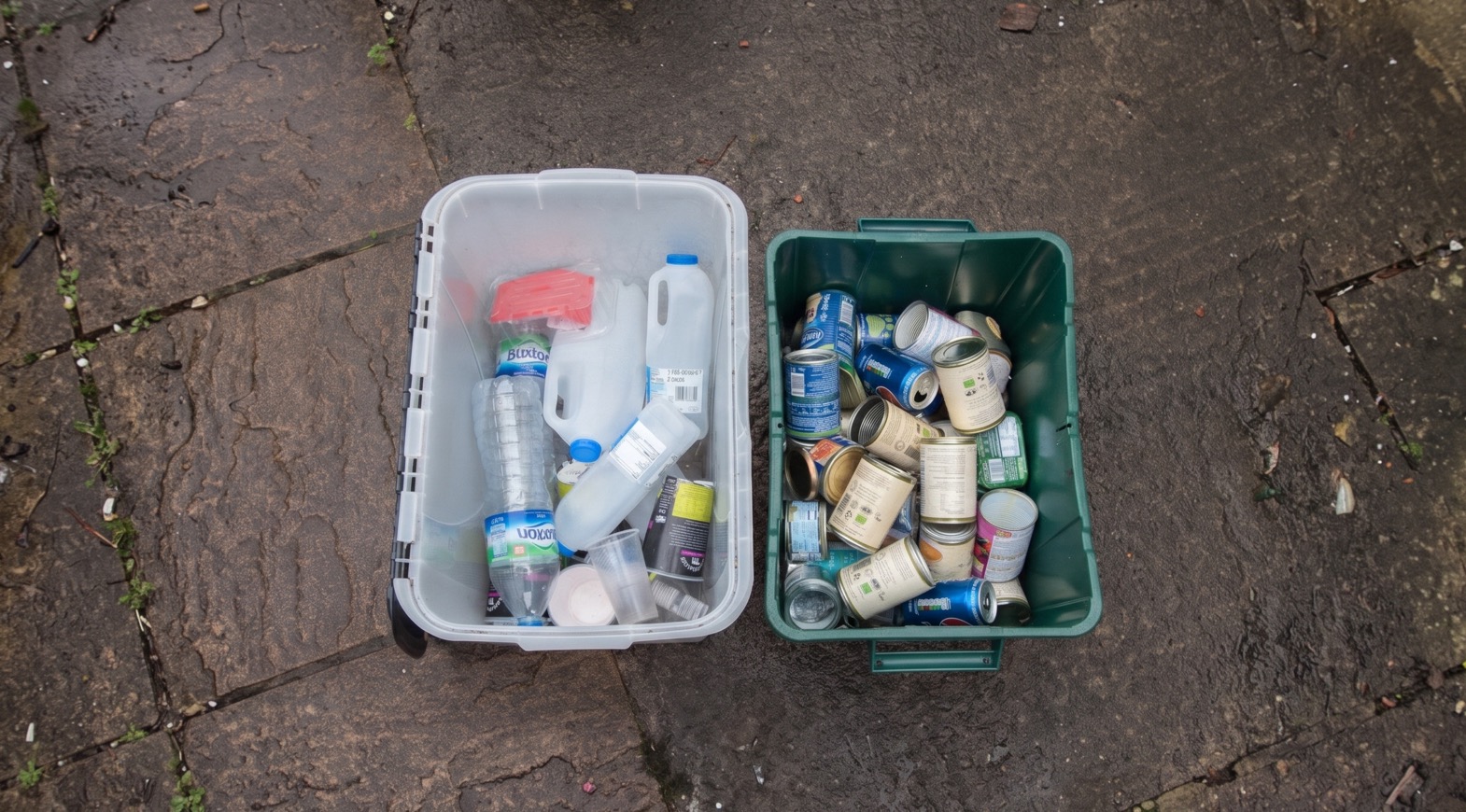
I’ve been sorting packaging into separate bins for years by confident guesswork. One look at the labels on almost any shopping item shows why the public are a little confused about what you can and can’t recycle.
A pack of Waitrose chorizo sausages carries three instructions: recycle the cardboard sleeve, rinse and recycle the plastic tray, do not recycle the plastic film over the top. The film around a multipack of M&S sparkling water gives a fourth answer: don’t recycle at home but take it to a large supermarket. A 750g pack of Waitrose beef mince, wrapped in plastic of its own, says only: do not recycle.
Leave the cardboard out of it and that is four pieces of plastic carrying three different sets of instructions, every one of them in line with the national labelling scheme. The packaging is doing what the rules ask of it.
The supermarkets and food manufacturers recently asked the Chancellor to scrap the packaging recovery note system in the Budget. The Budget came and went on 28 October with the plastic packaging tax rates untouched and PRNs still here. The industry has a strong case, but it is going to lose, and the reason has a lot to do with those four labels.
Willing but not confident
WRAP’s Recycling Tracker, the largest survey of its kind, bears this out. In March 2025 it asked 5,438 UK adults responsible for household rubbish and recycling, and almost nine in ten (89 per cent) said they regularly recycle at least most of what can be recycled. Willingness is not the problem. Confidence is: only 9 per cent are very confident about what can and cannot be recycled, and 58 per cent only mostly. Over half (56 per cent) put at least one accepted item in the general rubbish, and 81 per cent put at least one unaccepted item in the recycling.
Councils are not filling the gap: only 38 per cent had received information from them in the past year about what can and cannot be recycled.
None of this is about PRNs, certificates traded between producers and reprocessors that no household ever handles. The bin and the label are all the public can see of the system, and shoppers who cannot follow that are in no position to judge what lies behind it.
A compliance mechanism from 1997
Packaging recovery notes began life as a compliance tool, not a green tax. They arrived with the Producer Responsibility Obligations (Packaging Waste) Regulations 1997, which existed to help the UK meet the EU packaging directive’s recovery and recycling targets. The mechanism was a certificate market: reprocessors issued evidence of the tonnage they handled and producers bought it to show compliance. It was an accounting device, and for twenty years it attracted roughly the attention such things deserve.
Then came 2017 and Blue Planet II. A year later, Ipsos found that 78 per cent of people who had seen or heard of the programme said they were trying to buy fewer single-use plastics. A government facing a public mood of that size needs something to point at and reaches for whatever is nearest to hand.
What was nearest to hand was the certificate market. The UK bolted a Plastic Packaging Tax onto it in 2022, then extended producer responsibility fees, with a deposit return scheme due in October 2027. Four instruments, four announcements, and little sign that anyone asked what the thing would look like once they were all running at once. The bailout announced in October reads like a system somehow being held together by hand.
The mechanism that actually worked
Set all of that against the carrier bag charge, which began at 5p in 2015, has been 10p since 2021 and is probably the plastic measure most people could describe. Government figures show single-use bag sales at the main retailers falling by more than 98 per cent, from 7.6 billion in 2014 to 133 million in 2022/23. It is routinely held up as proof that pricing changes behaviour, but the pricing is not really what did the work.
The charge worked because everybody who paid it understood it. A few pence, visible at the till, charged on a thing you could see, for a reason you could state in a few simple words. I still keep a folded bag handy, a habit I never consciously decided to acquire.
Now go back to the bottle in your hand. There is a tax on what it is made of, a fee for what it costs to collect, a certificate for what supposedly happens to it afterwards, and from next year a deposit on top. Three of those four rules are invisible to the person paying, and none has a name a shopper would really recognise. Ask a shopper what the plastic tax is for and I suspect many would say it pays for recycling, yet the receipts go to the Treasury. I could not find a published poll asking shoppers whether they have even heard of packaging recovery notes.
The bit the industry won’t like
A group of manufacturers asking a Chancellor to scrap a green levy is likely to be met with suspicion, because the industry is not starting from public trust, which is the problem with consultation responses: nobody will take the industry’s word for it, so words are not what it should offer.
Companies calling for PRNs to be scrapped already know what they pay, what the certificates cost them and what recycling has delivered in return. Those three numbers, published together, would do more than any correspondence with Defra, by letting people check rather than asking them to trust.
But nobody will want to go first. Telling customers that the green taxes on their groceries have not delivered what was promised is uncomfortable, particularly when a competitor can stay quiet and leave the first mover to take the reputational hit alone.
But the alternative is where the industry is standing now, paying what the British Retail Consortium says is billions into a structure built to be seen rather than to work, and asking a Chancellor to spend political capital unpicking something the public has not yet been given a reason to doubt. A Chancellor is unlikely to dismantle a green levy until voters have already stopped believing in it.
Which brings me back to my chorizo and bottled water. The system was never built to be understood from my side of it, and a system nobody understands is a system nobody will defend, as true for the shopper at the bin as for the industry paying for it.
Our founder and CEO, Mike Coppen-Gardner, wrote about PRNs in The Grocer’s Saturday Essay: Shoppers need the truth about plastic tax.