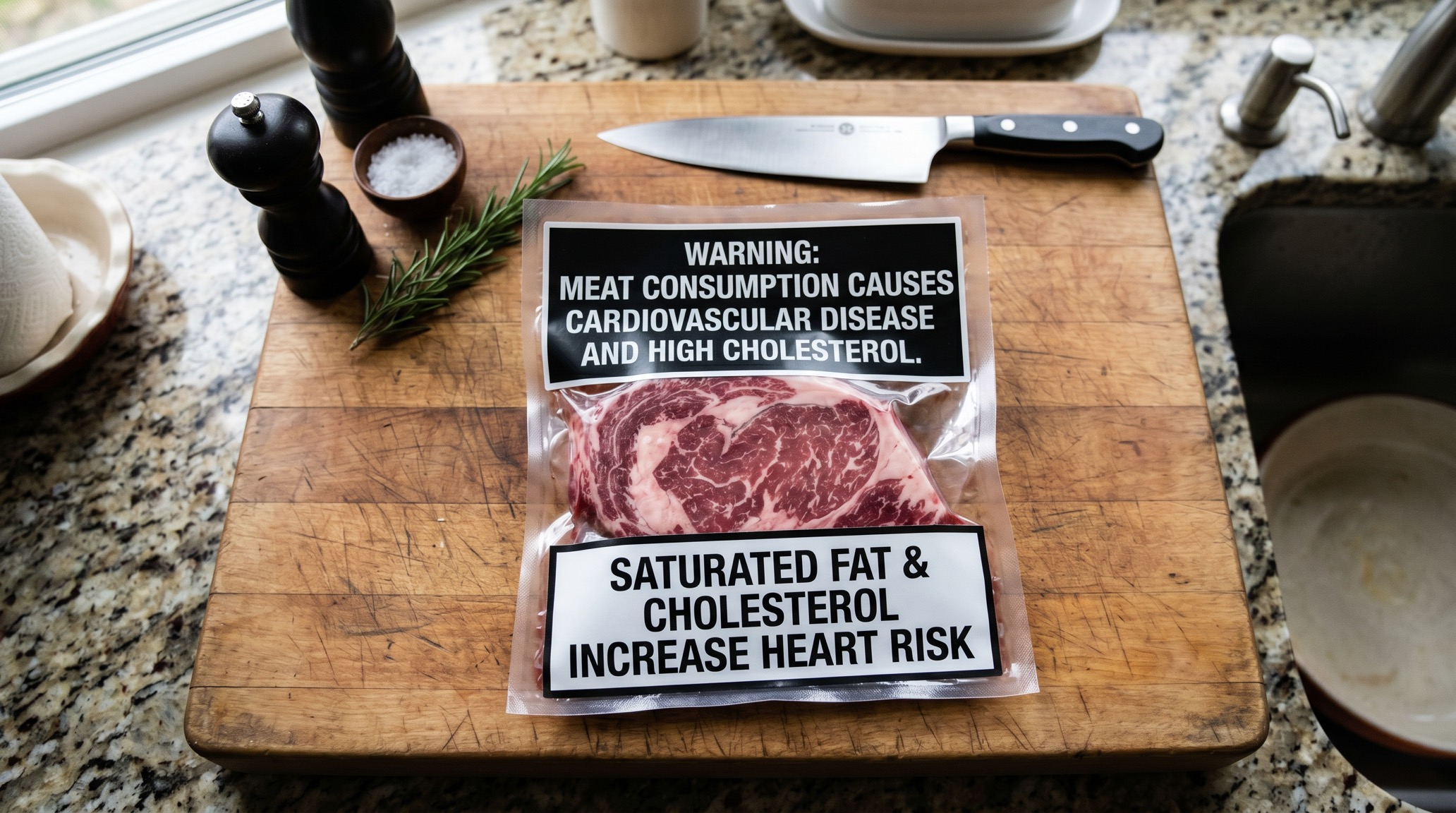
The tobacco playbook is being run against meat. Is the industry ready?
Our founder and CEO Mike Coppen-Gardner has been published in The Grocer on the organised campaign now being run against meat advertising in the UK and internationally, and what it means for any food business that has not yet thought carefully about where the argument is heading.
The piece opens with Project Slingshot: 750 advertisements across 206 London Underground stations, co-founded by the man behind Veganuary, backed by US philanthropy, featuring celebrity endorsements and targeting ordinary commuters on their morning commute.
The campaign describes itself explicitly as a “narrative pressure engine” modelled on anti-tobacco and anti-drink-driving campaigns. It is sequenced. It is funded. It is professionally designed. And it is not aimed at committed vegans. It is aimed at the person sitting on the Central line who did not know that 90% of pigs slaughtered in the UK are killed in CO2 gas chambers, and who, once told, says that is unacceptable.
The campaign’s own polling found 81% of Britons in that position. That is not a fringe campaign finding its way in from the outside. That is a mainstream argument working its way down from the top.
Amsterdam banned public advertising for meat products outright on 1 May 2026. Seven other Dutch cities are developing the same policies.
Four London councils committed to banning HFSS advertising on council-controlled sites in their May 2026 election manifestos.
The AHDB’s “Let’s Eat Balanced” campaign drew formal complaints to the ASA. The HFSS advertising restrictions that came into force in January 2026, for which the food industry lobbied hard and extracted real concessions, were described by the Obesity Health Alliance as a political capitulation. The industry won those arguments and called it a settlement. Its opponents called it a pause.
Mike’s argument is direct. The anti-tobacco playbook is now being run against meat.
The industry has spent years winning regulatory arguments, but it has not spent that time building belief. Compliance with regulation is not the same thing as a population that thinks well of what you do. And once the framing shifts, once meat advertising is accepted as the terms of the debate as something that creates a false social norm by obscuring harm, it becomes very hard to contest on commercial or regulatory grounds alone.
That window is narrowing.
SPQR works in regulated and contested industries because that is where communications work is hardest and where the stakes are highest. The meat sector is now operating in exactly that environment: a coalition of well-resourced, emotionally targeted campaigns, shifting local policy, and an international precedent being set city by city.
The industry has the arguments, but it has not yet made them with the same consistency and confidence that its opponents are bringing to theirs.
If you work in meat production, food retail, or an associated supply chain and you are starting to feel the pressure described in this piece, we would like to talk.
Get in touch at info@wearespqr.com